Abstract
This presentation offers hands-on, practice-based guidance for researchers, practitioners, and organisations seeking to integrate survivor-centred,
feminist, and decolonial approaches into research on
violence against women and girls (VAWG). Drawing on insights from a global Learning Circle convened by COFEM, the poster translates collective learning into concrete strategies that attendees can apply in everyday VAWG research practice to strengthen ethical rigour, relevance, and impact.
Traditional VAWG research continues to be shaped by colonial and top-down structures that limit whose voices are heard and whose knowledge counts. This constrains the transformative potential of research to meaningfully inform prevention and response efforts.
Feminist researchers and practitioners have long called for more ethical, participatory, and locally led approaches that center survivors as stakeholders and agents of change rather than research subjects.
To respond to this gap, COFEM convened a Learning Circle on Rethinking Research on VAWG Through a Decolonial Lens during the 2024 16 Days of Activism Against GBV, with follow-up dialogues continuing into 2025. Using participatory facilitation methods, over sixty feminist researchers, practitioners, and activists from diverse regions engaged in open dialogue, reflective exercises, and collaborative analysis. Participants shared locally led research examples, tools, and frameworks that challenge entrenched power hierarchies in knowledge production. Collective insights were synthesised into a Learning Brief capturing actionable guidance for feminist research practice.
Key learnings from the Learning Circle highlight strategies to:
• operationalise
decolonial feminist research, including: redistributing resources and decision-making power to centre survivor-led and community-based research;
• embedding trauma-informed and care-centred research practices;
• designing research that supports both documentation and survivor agency;
• institutionalising participatory methodologies such as feminist storytelling and oral histories;
• establishing iterative feedback mechanisms through survivor councils or community advisory groups; and
• grounding research in local contexts through culturally sensitive, local languages, and inclusive approaches.
By directly presenting these practices, the presentation equips participants with practical tools to reshape how VAWG research is designed, funded, conducted, and used. In doing so, it advances more equitable and participatory feminist research practices, contributes to a more inclusive global evidence ecosystem, and strengthens research in supporting survivor-led prevention and response to violence.
Biography
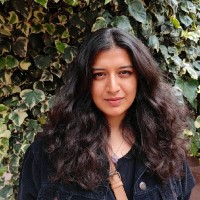
Pupul Lama is a humanitarian practitioner and feminist researcher from India, currently based in the Netherlands. She holds an Erasmus Mundus Joint Master’s in International Humanitarian Action (NOHA+), with a specialization in conflict, peacebuilding, and religion, and a Bachelor’s degree in Social Work from the Tata Institute of Social Sciences. With over five years of experience across humanitarian, development, and peacebuilding contexts, her work focuses on violence against women and girls (VAWG/GBV), feminist movement-building, and gender-responsive monitoring, evaluation, and learning. Pupul currently serves as Coordinator of the Coalition of Feminists for Social Change (COFEM) and Thematic Lead of its Feminist Research Working Group, supporting movement-led research, collective learning, and feminist knowledge production across regions. Her work is guided by feminist, intersectional, and decolonial values.