ADD THESE DATES TO YOUR E-DIARY OR GOOGLE CALENDAR
This site is part of the Siconnects Division of Sciinov Group
This site is operated by a business or businesses owned by Sciinov Group and all copyright resides with them.
ADD THESE DATES TO YOUR E-DIARY OR GOOGLE CALENDAR

University of Saskatchewan, Canada
Title:A feminist postcolonial approach to a contentious transnational history of medicine encounter: Canadian medical missionaries in China
Drawing on the feminist postcolonial methodologies of Gayatri Spivak in her seminal essay “Can the Subaltern speak” (1988), this study examines the encounter between colonial Canadian medical scientists and subaltern Chinese students and Indigenous people of China through the lens of intersectionality of their racial, class, gender, and nationality identities. Canadian missionary doctors of the Methodist West China Mission founded a university in Sichuan China named West China Union University (1910-1950). I want to develop a framework to examine Canadian missionary medical activities in China that both acknowledge the colonial dimension of missionary medicine, but also gives agency to female missionary doctors, Chinese students, Chinese and other minority patients. I also use feminist studies on women’s labor to highlight the underacknowledged labor of missionary spouses. At its beginnings The West China Mission had a history of asking missionary female doctors when they married to resign their post because of traditional values associated with the importance of wifely duties. Because of the need of female missionary doctors some of these missionary wives performed free unpaid labor and became their husbands’ assistants. Some prominent female missionaries published scientific papers with their husbands, but their contributions were obscured by their husband’s prominent status, and they were seen as only helping their husbands, despite having made an important contribution to their publications. This paper explores the mystification of women’s academic labor and women’s contribution to medical scientific research. There is a rich literature of such mischaracterization of academic women’s research on which I draw.
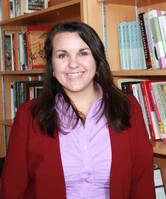
Dr. Mirela David is an Associate Professor in Modern Chinese History/ Women and Gender Studies at the University of Saskatchewan. She holds a Ph.D in History from New York University, an MA in Sinology from the University of Tübingen and an MA in Asian Studies from the University of Bucharest. She has published a chapter “Eugenics, Public Health, and Modern Sexuality” in the Cambridge World History of Sexualities (2024) and another chapter “#Me Too in Postsocialist Countries: a Comparative Analysis of Romanian and Chinese Feminist Activism against Sexual Violence” in The Routledge Handbook of the Politics of the #MeToo Movement (2020). Her article “‘The Task Is Hers”: Going Global, Margaret Sanger’s Visit to China in 1922” was published in Asia Pacific Perspectives. She has published an article in the Canadian Bulletin of Medical History, “Female Gynecologists and their Birth Control Clinics: Eugenics in Practice in 1920s-1930s China.